
Top High-Precision Current Sensor Manufacturers in 2026
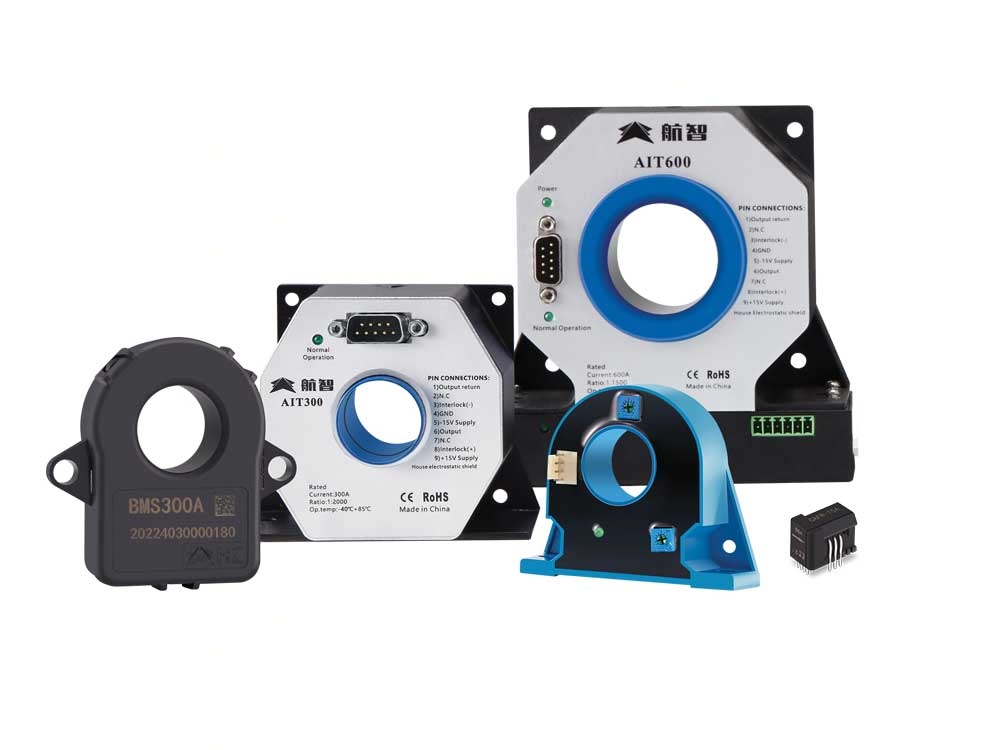
Behind every reliable power system is a sensor arus that performs exactly as specified—but with dozens of manufacturers claiming industry-leading accuracy, knowing who to trust is harder than it looks. The wrong choice can lead to costly recalibration cycles, failed certifications, or, worse, undetected measurement errors in the field.
This article breaks down the key performance metrics that separate good sensors from great ones, ranks the top current sensor manufacturers to watch in 2026, and provides a direct comparison to help engineers match the right manufacturer to their specific application.
How to Evaluate a Current Sensor Effectively?
The primary selection criteria for sensor arus presisi tinggi include accuracy class (measured in ppm), temperature drift (thermal drift), linearity, bandwidth, output type, and compliance certifications. Generally, a higher accuracy class (indicated by a lower ppm value) ensures more precise measurements. Temperature drift determines the sensor’s stability across varying thermal environments, while linearity directly impacts measurement consistency.
Bandwidth defines the frequency range of the signals that can be measured, and the output type must be compatible with the target system architecture. Lastly, international certifications are crucial for product reliability and regulatory compliance in markets. A thorough evaluation of these metrics ensures that the selected sensor fully aligns with the demands of practical application.
Which Current Sensor Manufacturers Are Worth Considering in 2026?
To give you a clearer picture of what’s available, this article has compared the high-precision series from several leading manufacturers—with their core technical parameters summarized in the table below.
| Manufacturer | Headquarters | Core Technology | Typical Rentang Saat Ini | Best Accuracy |
| Hangzhi | Shenzhen, China | Multi-point Fluxgate | 0-30,000A | tingkat ppm |
| LEM | Geneva, Switzerland | Fluxgate, Hall Effect, Rogowski, etc. | 0-24,000A | tingkat ppm |
| Danisense | Denmark | Closed-loop Fluxgate | 50A -11,000 A | tingkat ppm |
| Allegro MicroSystems | Manchester, USA | Hall Effect, TMR | 0-1000 A+ | Approx.0.5%-1% |
| Infineon | Germany | Hall Effect, TMR | Up to several kA | Approx.0.5%(Hall) |
| Dewesoft | Trbovlje, Slovenia | Fluxgate (CCVR), Rogowski Coil | 0-30,000 A | Approx.0.03% |
| Tamura | Tokyo, Japan | Fluxgate, Hall Effect | High-voltage DC | Approx. 10 ppm (Select models) |
| Yokogawa | Musashino, Japan | Shunt + External Sensor Input | System-level: 0.01% | 0.01%System Ketepatan |
The Manufacturer Profiles You Want to Know
Do you want to know more information? Of course, these manufacturers are worth delving deeper into. You can see more clearly after reading these profiles.
Hangzhi
Hangzhi is an ISO9001 and IATF16949-certified manufacturer specializing in high-precision current and voltage sensors, electrical measuring instruments, and related solutions. Its products serve diverse sectors including the electrical industry, metrology, medical devices (e.g., MRI), railways, satellites, hydrogen accelerators, power transmission, scientific research, motor drive testing, battery management systems (BMS), and photovoltaic inverters.
The company focuses on multi-point fluxgate current sensing technology, particularly for high-current applications, with product lines covering 0 A to 30,000 A. Key series such as AIT, IIT, and DIT are widely used in medical equipment, power analysis, electrical calibration, and metering.
Hangzhi’s current transducers utilize fluxgate-based feedback control for current detection, delivering high precision, wide bandwidth, low zero drift, low temperature drift, and strong stability. Leveraging multi-point zero-flux gate and closed-loop excitation control, the products achieve exceptional linearity, stability, and a peak accuracy of 10 ppm—making them ideal for demanding scientific research and calibration laboratories, all at a competitive cost.
LEM
As an established Swiss pioneer in current sensing, LEM offers a diverse portfolio encompassing Fluxgate, Hall Effect, and Rogowski technologies, with measurement ranges spanning from fractional amperes to tens of thousands of amperes and accuracy down to the ppm level.. Relies predominantly on established Hall-effect technology for broad industrial, automotive, and renewable energy applications. Backed by numerous international certifications, LEM products are highly regarded for their field reliability.
Danisense
Founded by Danish engineers, Danisense focuses exclusively on closed-loop Fluxgate technology. Their sensors cover a current range of 50 A to 11,000 A. Targeting ultra-high precision scenarios, Danisense products are frequently designed into scientific research and aerospace test equipment. While positioned at a premium price point, they are ideal for high-accuracy, lower-cost-sensitivity projects.
Allegro Micro Systems
Allegro provides chip-level current sensors utilizing Hall Effect and TMR technologies, typically optimized for current ranges under 1000 A with an accuracy of around 0.5%–1%. Thanks to their cost-effectiveness and compact packaging, Allegro sensors are widely adopted in automotive electronics and consumer products, though they are not the primary choice for ultra-high-precision (ppm-level) applications.
Infineon Technologies
Infineon’s XENSIV™ series leverages Hall Effect and TMR technologies, making it highly suitable for automotive traction and motor control applications. Capable of handling ranges up to several kiloamperes with an accuracy of around 0.5%, they offer moderate pricing and high integration, which is well-suited for general industrial and automotive use cases. For scientific-grade, ultra-high precision measurements, Fluxgate alternatives remain preferable.
Dewesoft
Dewesoft provides comprehensive measurement solutions, with a current sensor lineup featuring zero-flux (CCVR) and Rogowski coil technologies. Covering a wide range from mA to 30,000 A with a top accuracy of about 0.03%, the company tightly integrates its hardware with proprietary software. Frequently deployed in R&D and test benches, Dewesoft’s distinct advantage lies in its seamless system compatibility and streamlined data acquisition.
Tamura Corporation
Tamura specializes in current sensors for high-voltage DC (HVDC) and niche industrial applications. As a long-standing manufacturer, its product lines cover both fluxgate and Hall-effect sensors, with certain HVDC models reaching an accuracy of approximately 10 ppm. Offering a stable supply chain in the Asia-Pacific market, Tamura stands out as a reliable legacy vendor.
Yokogawa Electric
Renowned for its test and measurement instrumentation, Yokogawa provides system-level current measurement solutions rather than standalone components. By pairing specialized shunts with external sensor modules, it achieves a system-level accuracy of 0.01%. Because this approach involves multiple components, the overall hardware setup must be evaluated holistically. Yokogawa equipment is heavily utilized in power analysis and high-end scientific research.
Conclusion & Selection Summary
When selecting a current sensing solution, the optimal choice depends heavily on the specific application requirements—balancing precision, budget, integration level, and measurement range.
For Ultimate High-Precision & Scientific Research (ppm-level):
Hangzhi stands out as the most compelling choice. It delivers exceptional ppm-level accuracy via advanced multi-point fluxgate technology, covering up to 30,000 A. Crucially, it combines this scientific-grade performance with competitive cost-effectiveness and automotive-grade (IATF16949) quality, making it ideal for calibration labs, MRI, and power metering. Lem and Danisense are more expensive and suitable for projects where cost is not a primary consideration.
For Broad Industrial & Automotive Applications (Hall-Effect & TMR):
LEM is the reliable, established leader with a diverse technology portfolio (Hall, Fluxgate, Rogowski) and strong field reliability across renewable energy and heavy industry. Infineon and Allegro offer highly integrated, compact chip-level solutions (Hall/TMR) that are cost-effective and ideal for high-volume automotive and consumer electronics, though they are limited to ~0.5% accuracy and moderate ranges.
For Integrated System & Data Acquisition:
Dewesoft excels with its seamless hardware-software ecosystem, offering excellent accuracy (~0.03%) across a wide range (mA to 30 kA) using zero-flux and Rogowski technologies—perfect for R&D test benches and power analyzers.
For Specialized High-Voltage & Niche Industrial Needs:
Tamura is a dependable legacy vendor for HVDC and niche applications, offering stable supply and solid accuracy (down to ~10 ppm) in the Asia-Pacific market. Yokogawa is the go-to for system-level power analysis, achieving 0.01% accuracy via shunt-and-module combinations, though it requires a holistic system evaluation rather than a component-level approach.
In short, choose Hangzhi for the best balance of ultra-high precision and cost; Lem and Danisense are suitable for projects where cost is not a primary consideration; LEM/Infineon/Allegro for reliable, high-volume industrial/auto uses; Dewesoft for integrated testing systems; and Tamura/Yokogawa for specific high-voltage or instrumentation-focused solutions.
Tentang Hangzhi
Shenzhen Hangzhi Precision Electronics Co., Ltd. adalah perusahaan teknologi terkemuka yang didedikasikan untuk penelitian dan pengembangan, produksi, penjualan, dan kustomisasi solusi sensor arus presisi tinggi, sensor tegangan, dan alat ukur listrik presisi tinggi. Kami berusaha keras untuk membangun merek yang terkenal fluxgate sensor arus presisi dan alat ukur listrik presisi di bidang DC, dan berusaha untuk berkembang menjadi pemimpin internasional dalam bidang elektronik presisi di bidang sistem DC.